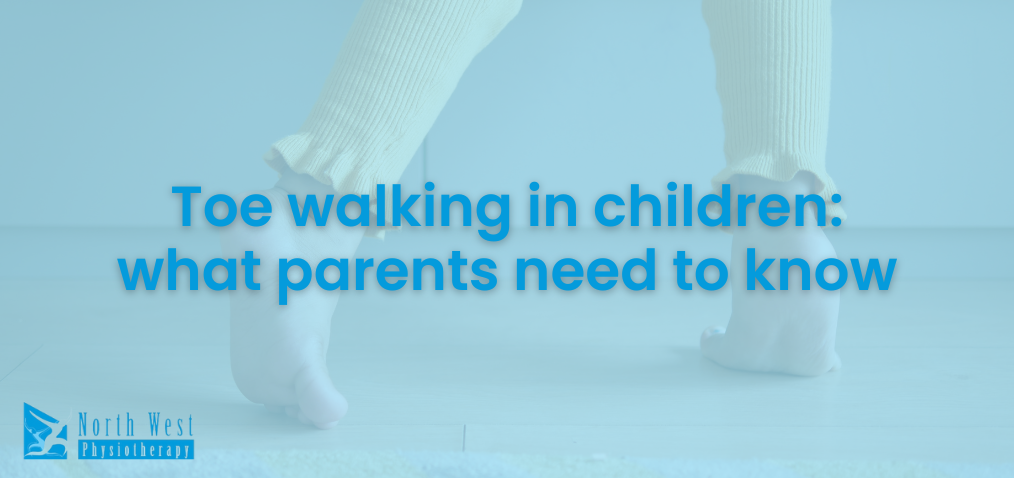
Toe walking is a common concern among parents of young children. While it can be a normal phase of early development, persistent toe walking after age two may signal the need for further investigation.
This blog explores what toe walking is, its potential causes, and how physiotherapy can help. If you’re a parent searching for answers, rest assured – we’re here to provide support, understanding, and expert care to help your child achieve the best outcomes.
What is toe walking?
Toe walking refers to a walking pattern where a child walks primarily on the balls of their feet, with minimal contact between the heels and the ground.
While this is common in early walkers aged 12-15 months, most children outgrow this habit by age two. If toe walking continues beyond 2-3 years of age, it may indicate an underlying issue that requires attention.
Signs and symptoms of toe walking:
- Tiptoeing and walking on the balls of the feet with limited heel contact
- Discomfort when attempting a normal heel-to-toe gait
- Complaints about wearing shoes
- Difficulty with activities like jumping, climbing stairs, or running
Toe walking physio: how physiotherapy can help
Physiotherapy is a key intervention for children experiencing toe walking to address both the symptoms and underlying causes. Treatment focuses on improving flexibility, strengthening muscles, and retraining gait patterns to support proper foot placement.
Toe walking and neurological disorders
Toe walking can sometimes be linked to neurological conditions such as:
- Muscular dystrophy: a condition affecting muscle strength and function
- Cerebral palsy: a neurological disorder that affects movement and coordination
- Brain injuries: trauma or other neurological disruptions that impact gait
In these cases, physiotherapy plays an important role in managing symptoms and improving mobility.
Idiopathic toe walking: when the cause is unclear
Idiopathic toe walking refers to cases without a clear medical or neurological cause. It may result from factors like:
- Family history of toe walking
- Altered sensory processing, such as tactile, proprioceptive, or vestibular input
In many instances, children outgrow idiopathic toe walking with the right guidance and support.
Toe walking exercises and treatment options
Physiotherapy treatment for toe walking may include:
1. Strengthening and stretching:
-
- Stretching tight calf muscles and Achilles tendons
- Strengthening exercises to support proper gait and improve balance
2. Orthotics or bracing:
-
- Custom insoles or braces to encourage heel-to-toe walking
- Collaboration with podiatrists or orthotists for tailored solutions
3.Specialist interventions:
-
- Botox injections or surgical procedures in severe cases of muscle tightness or underlying neurological conditions
Toe walking physiotherapy: early intervention matters
Addressing toe walking early can prevent long-term complications and support your child’s physical development. Our physiotherapy team provides personalised care plans tailored to your child’s needs, ensuring they receive the best support possible.
Toe walking in children: what parents need to know
Toe walking in children can be a normal developmental phase, but persistent or symptomatic cases may require expert attention. At North West Physiotherapy Lutwyche, our team specialises in paediatric physiotherapy and helping children overcome toe walking through tailored programs.
Contact us or book online today to book an assessment if you’re concerned about your child’s toe walking. Early intervention can make a big difference, and we’re here to help your child take confident steps toward a healthier future.
Disclaimer: This blog provides general information and is not a substitute for professional healthcare advice. For personalised assessment and treatment, always consult a qualified healthcare provider.
By Man