

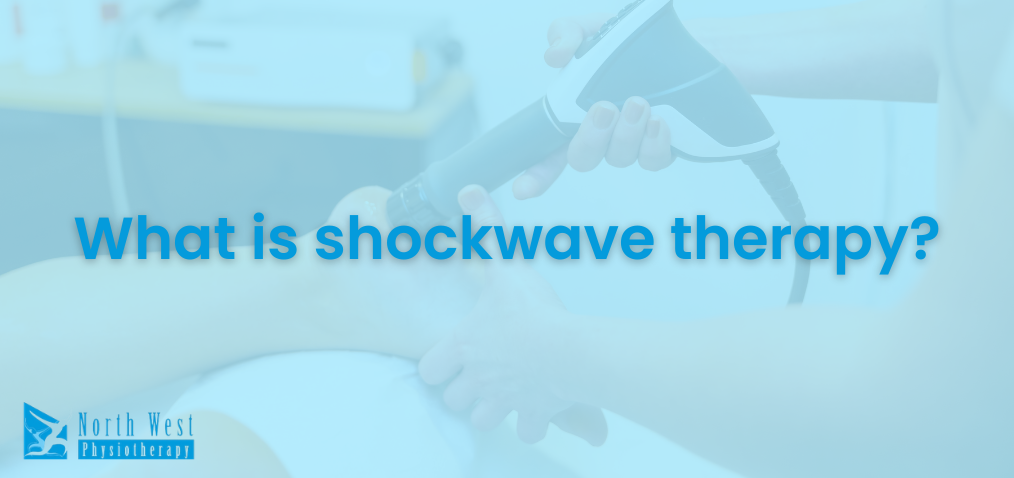
Shockwave therapy is an evidence-based treatment used to stimulate tissue repair, improve blood flow, and reduce pain in stubborn tendon and soft tissue conditions. It’s commonly used for issues like plantar fasciitis, tennis elbow, Achilles tendinopathy, and other injuries that haven’t responded to standard treatment alone.
Rather than masking symptoms, shockwave therapy works by triggering a biological response in the affected tissue. The mechanical pulses encourage the body’s natural healing processes, making it particularly effective for chronic or slow-healing injuries where recovery has stalled.
At North West Physio, shockwave therapy is used intentionally and strategically. We assess whether it’s appropriate for your condition, how it fits within your overall treatment plan, and when it will deliver the most benefit. Used at the right time and for the right presentation, it can significantly accelerate recovery and improve long-term outcomes.
In this blog, we’ll break down how shockwave therapy works, what conditions it’s best suited for, and what to expect if it’s part of your treatment plan.
Ready to explore if shockwave therapy could be the missing piece in your recovery puzzle? Book a comprehensive assessment with our experienced team and let’s discuss all your options in a supportive, no-pressure environment.
What is shockwave therapy?
Shockwave therapy is a non-invasive treatment that uses high-energy sound waves applied directly to injured or painful tissue. Also known as extracorporeal shockwave therapy (ESWT), this innovative approach has been transforming pain management in musculoskeletal care for decades.
There are two main types of shockwave therapy:
- Radial shockwave therapy: Uses pressure waves that spread out from the treatment head, ideal for superficial conditions like tennis elbow.
- Focused shockwave therapy: Delivers concentrated energy to deeper tissues with pinpoint accuracy, perfect for conditions like plantar fasciitis.
Both approaches harness the power of acoustic waves to stimulate your body’s natural healing processes, making shockwave therapy particularly effective for chronic conditions that haven’t responded well to other treatments. At North West Physio, we use advanced extracorporeal shockwave therapy equipment to ensure optimal treatment outcomes for our patients.
How does shockwave therapy work?
When these high-energy sound waves penetrate your tissue, they trigger several powerful healing mechanisms:
Stimulates tissue regeneration: The acoustic waves encourage the formation of new blood vessels and promote cellular repair at the injury site.
Increases blood flow: Enhanced circulation delivers essential nutrients and oxygen to damaged areas, accelerating your body’s natural healing process.
Disrupts pain pathways: Shockwave therapy can help ‘reset’ chronic pain signals that have become stuck in a cycle, providing lasting relief for persistent conditions.
Breaks down scar tissue: The mechanical effects help soften and reorganise problematic scar tissue that may be limiting your movement or causing discomfort.
What conditions can shockwave therapy treat?
Shockwave therapy has shown excellent results for a wide range of persistent musculoskeletal conditions. If you’re dealing with any of these issues, you could be an ideal candidate:
- Plantar fasciitis: That stabbing heel pain that’s worst in the morning
- Achilles tendinopathy: Chronic pain and stiffness in your Achilles tendon
- Tennis elbow and golfer’s elbow: Persistent elbow pain from overuse
- Patellar tendinopathy: Knee pain, particularly around the kneecap
- Calcific shoulder tendinopathy: Shoulder pain caused by calcium deposits
- Chronic heel pain: Ongoing discomfort that limits your daily activities
- Persistent muscle trigger points: Those stubborn knots that won’t release
What these conditions share is their tendency to become chronic and resistant to conventional treatments. Research consistently supports shockwave therapy’s effectiveness for these conditions, with success rates often exceeding 75-85% when properly applied to appropriate conditions.
What does shockwave therapy feel like?
We understand that trying any new treatment can feel daunting, especially when you’re already dealing with pain. Let’s address this concern directly and honestly.
The sensation during shockwave therapy varies from person to person, but most patients describe it as:
- Tolerable discomfort: Similar to deep pressure or firm massage
- Short-lived: Each pulse lasts only milliseconds
- Adjustable intensity: Your clinician can modify the treatment based on your comfort level
- Improving over time: Many patients find subsequent sessions more comfortable as healing progresses
Our experienced physiotherapists monitor your response closely throughout treatment, ensuring you remain comfortable while achieving maximum therapeutic benefit.
How many sessions are needed?
Setting realistic expectations is crucial for your treatment success. Shockwave therapy typically involves:
- 3-6 treatment sessions for most conditions
- Sessions spaced 1-2 weeks apart to allow tissue response
- Progressive improvement rather than instant results
- Individualised treatment plans based on your specific condition and response
Many patients notice improvements after 2-3 sessions, with optimal results typically achieved by the completion of their treatment course.
Is shockwave therapy safe?
Yes! Shockwave therapy is a very safe treatment:
- Non-invasive: No needles, incisions, or anaesthetic required
- Clinically proven: Extensively researched with decades of successful use
- Minimal side effects: Most patients experience only temporary mild soreness
- No downtime: You can return to normal activities immediately
- Widely accepted: Used in hospitals and clinics worldwide
When shockwave therapy should be avoided:
- Pregnancy
- Blood clotting disorders
- Active infections at treatment site
- Certain medications (blood thinners)
- Recent steroid injections (within 6 weeks)
Temporary redness or slight tenderness at the treatment site may occur but typically resolves within 24 to 48 hours.
Who is shockwave therapy best suited for?
Shockwave therapy works particularly well for people who:
- Have been dealing with chronic or recurring pain for months or years
- Are experiencing tendon-related injuries that haven’t healed properly
- Find their pain isn’t responding to rest, medication, or exercise alone
However, shockwave therapy isn’t suitable for everyone. A thorough assessment with one of our experienced physiotherapists is essential to determine if it’s the right approach for your specific situation.
Shockwave therapy might be the missing piece in your recovery puzzle
While shockwave therapy isn’t a magic cure, when combined with appropriate physiotherapy and exercise, it can be remarkably effective for chronic conditions that haven’t responded to other treatments.
Book a comprehensive assessment with our experienced physiotherapy team and we’ll discuss all your options in a supportive, no-pressure environment. Contact North West Physio today to start your journey toward lasting pain relief with shockwave therapy in Brisbane.
