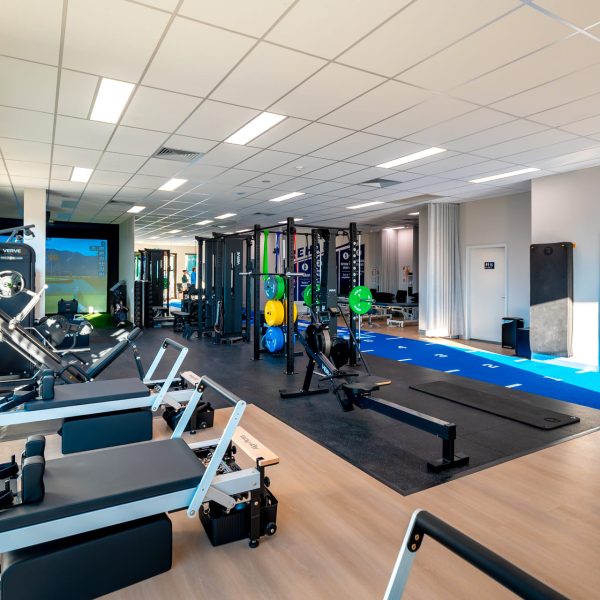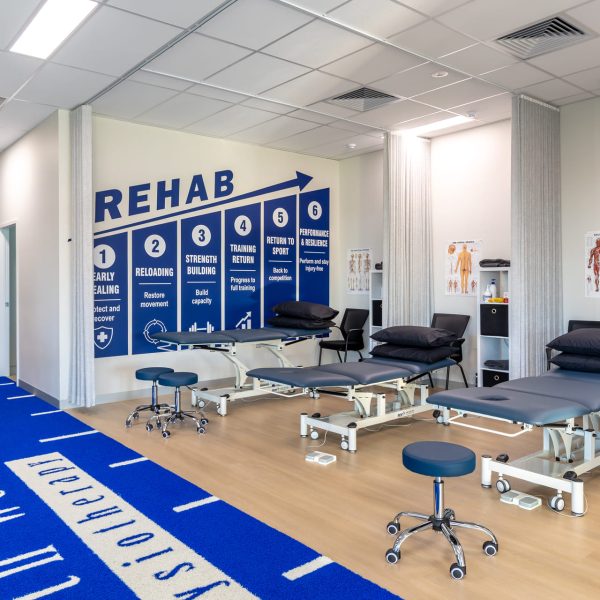


A golf physio swing assessment analyses how your body moves throughout the swing to identify anything limiting your performance, whether it’s pain, reduced mobility, or a loss of power and consistency. At North West Physio, we work with golfers who want to keep playing at their best for as long as possible. That means understanding what your body needs now, before a minor restriction becomes an injury, and before a performance plateau becomes permanent.
What is golf physiotherapy?
Most physiotherapy treats the site of pain. For example, you come in with lower back pain and the treatment focuses on your lower back. While that is perfectly appropriate for most conditions, for golfers, there’s an opportunity to optimise your swing to prevent and/or manage injury as well as improve your performance.
The golf swing is one of the most physically demanding rotational movements in sport. It loads the spine, hips, and shoulders in very specific ways, and when your body cannot move as the swing demands, it compensates. Those compensations are where injuries start and where performance quietly drops off.
A common example: a golfer presents with persistent lower back pain. A general physio treats that lower back pain. A golf physio assesses hip rotation, thoracic mobility, and how those limitations play out through the swing. Often, the back is not the source of the problem at all. It is carrying load that the hips or thoracic spine should be sharing.
At North West Physio, we approach every golfer with this fuller picture in mind.
Who is a golf physio swing assessment for?
The golf swing assessment at North West Physio is designed for two groups of golfers.
Golfers managing pain or injury: Lower back pain, hip tightness, shoulder discomfort, and elbow strain are all common among recreational golfers, particularly those who have been playing for decades. If you have tried rest, stretching, or massage and found only temporary relief, a golf-specific assessment can identify the physical reasons behind those symptoms and build a targeted treatment plan around them. Our dedicated page on physio for lower back pain covers how we approach spinal issues more broadly.
Golfers chasing performance: You do not need to be in pain to benefit from this assessment. If your handicap has plateaued, your distance has dropped, or you feel your swing is becoming increasingly inconsistent without an obvious reason, the issue may be physical capacity rather than technique. Golf physio can identify what your body is limiting and give you a targeted programme to address it, framed as sports performance work rather than injury management.
Many of our clients fit both descriptions. Pain and performance loss often share the same physical root.
What a golf physio swing assessment at North West Physio involves
Our golf physio swing assessment runs for approximately 60 to 90 minutes. You will be asked about your history, your game, and what you have already tried. Bring your clubs if you have them; if not, we have equipment on site. At the end, we sit down and walk through what we found in plain language, not clinical jargon. The assessment has two distinct parts.
Part one: TPI-based physical movement screening
We use the Titleist Performance Institute (TPI) framework, the global gold standard for golf-specific physical assessment, used by physiotherapists and conditioning coaches working with touring professionals worldwide.
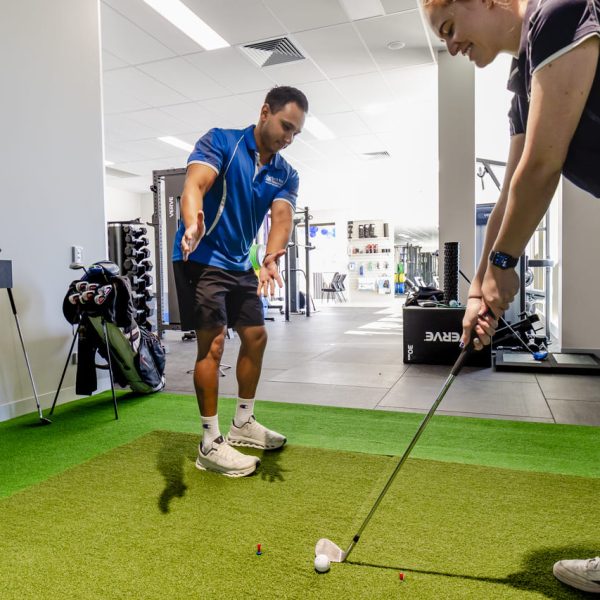
The screening takes you through a series of specific movement tests, including the Pelvic Tilt, Torso Rotation, and Overhead Deep Squat assessments. Each test is designed to reveal how well your body can produce and control the movements that a golf swing requires.
We assess:
- Hip mobility and rotation, including lead and trail side differences
- Thoracic spine rotation and extension
- Lumbar stability and load tolerance
- Shoulder mobility and scapular control
- Ankle and knee flexibility
- Core control and sequencing
- Balance and weight transfer
This takes around 20 to 30 minutes and gives us a precise physical picture of what your body can and cannot do. The findings directly inform what we look for in the second part of the assessment.
Part two: Golf simulator swing analysis
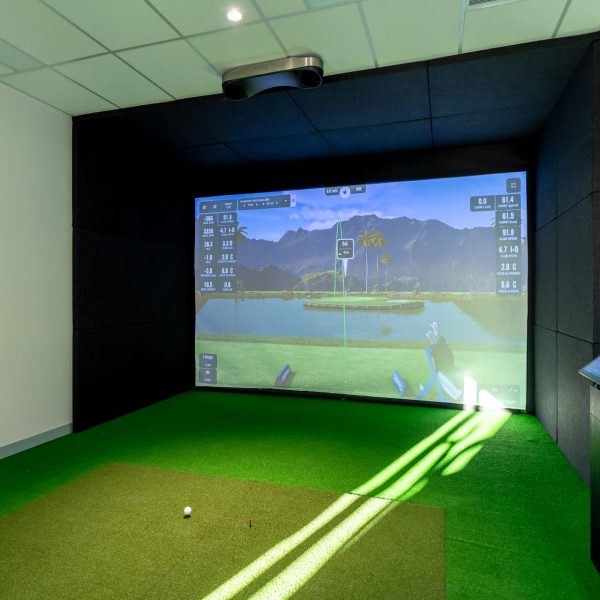
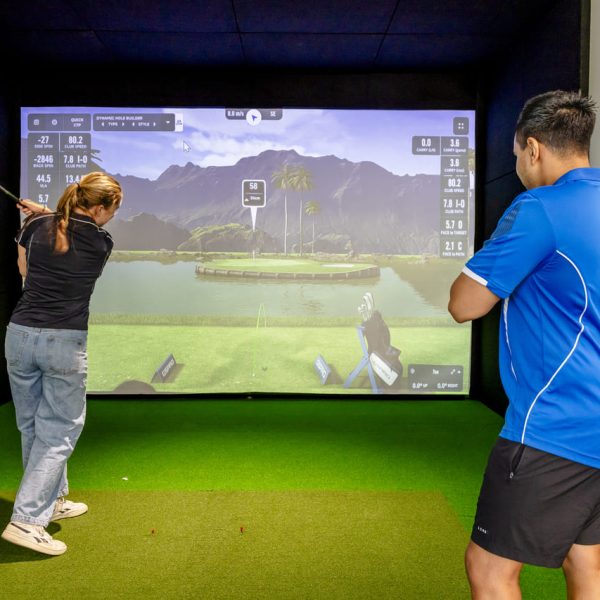
Our Carseldine clinic has a golf simulator, which is a meaningful clinical tool, not just an entertainment feature.
When you swing in real conditions, physical compensations that may not appear in a static movement screen become visible. The simulator captures objective swing data, including club path, face angle, attack angle, and ball flight, giving us a picture of how your physical limitations are expressing themselves under actual swing conditions.
This is where the two parts of the assessment connect. The movement screen tells us what your body cannot do. The swing analysis shows us how that limitation is affecting your mechanics and contributing to injury risk or performance loss.
The 12 TPI swing characteristics we assess
One of the most clinically valuable aspects of the TPI framework is its identification of specific swing characteristics that consistently correlate with physical limitations and injury risk. During your simulator assessment, we look for the following:
- S-Posture: Excessive lumbar lordosis at address, often linked with poor hip mobility and glute activation
- C-Posture: Rounded upper back at address, typically associated with limited thoracic extension
- Loss of Posture: Changes in original spine angle during the swing, a significant lower back stress indicator
- Flat Shoulder Plane: Shoulders level out at the top of the back swing, often caused by latissimus dorsi stiffness or limited trunk and pelvis separation
- Early Extension: Hips thrusting toward the ball through impact, strongly linked to lower back and hip pain
- Over-the-Top: Club path moving outside to inside the swing plane, frequently a compensation for limited thoracic rotation
- Sway: Excessive lateral movement of the hips away from the target on the backswing, often a hip mobility or stability issue
- Slide: Excessive lateral movement of the hips toward the target on the downswing, typically linked to poor glute and hip control
- Reverse Spine Angle: Lateral upper body lean toward the target at the top of the backswing, one of the highest-risk positions for lower back injury
- Hanging Back: Failure to transfer weight to the lead side through impact, often related to lead hip or ankle restriction
- Casting/Early Release: Loss of wrist angle too early in the downswing, frequently a compensation for limited thoracic or hip mobility
- Chicken Wing: Lead arm breakdown through impact, often linked to poor shoulder rotation and thoracic mobility
Each characteristic has a direct physical correlate. We are not just identifying what your swing looks like. We are identifying why it looks that way, and what your body needs to change it. Our post on elevating your golf game with golf TPI goes into further detail on how the TPI framework works in practice.
A scenario we see regularly
Here is a situation that is common in our clinic.
A golfer in his mid-fifties comes in having lost around 20m off the tee over two seasons. He has been working with his golf coach to fix his backswing, with limited success. The coaching is good, but the problem is not technical.
The assessment reveals restricted thoracic rotation and limited hip internal rotation on the lead side, both common and addressable physical limitations. His coach has been trying to correct through technique what the body was physically preventing.
Within six to eight weeks of targeted mobility and strengthening work, most golfers in this position see measurable improvement in swing range and ball distance. More importantly, they understand for the first time why the technical coaching was not producing the changes they were after.
This is what sets golf physio apart from working on technique alone. If you would like to read a first-hand perspective on this kind of journey, our golfing Australia feature with Tom offers a relatable account.
When physio and a golf coach work together
Golf physio and golf coaching address different things, and both matter.
A coach works on technique: grip, stance, alignment, swing plane, and ball striking. A golf physio works on the physical capacity that allows technique to be applied consistently. The two are complementary, and when they communicate, outcomes improve significantly.
Here is a practical example. Your coach has identified that you are not completing a full shoulder turn. They have given you drills and cues, but nothing seems to stick. The reason may not be technical at all. It may be that your thoracic spine has insufficient rotation to physically complete that movement. No amount of instruction will change a structural limitation. That is where physio comes in.
Once the physical restriction is addressed, the technical coaching that previously felt impossible often clicks into place within a few sessions. The physio does not try to make you hit it straighter. The physio addresses what is preventing you from being able to follow your coach’s instruction. Our sports physio approach applies this same principle across all sports.
What happens after the assessment?
At the conclusion of the session, you receive a clear, plain-language debrief of the findings and a personalised plan that typically includes:
- Targeted mobility work for the specific restrictions identified
- Strength and stability exercises chosen for your physical profile and swing demands
- Guidance on how your findings relate to your current coaching programme, if you are working with a coach
- A realistic timeline and benchmarks for improvement
Some clients also benefit from ongoing golf physiotherapy sessions to address more complex structural issues. Others need only a targeted home programme and a review appointment to monitor progress. The plan is built around you.
Golfers in North Brisbane suburbs can find specialised golf physio services at our Carseldine and Keperra clinics.
Book a golf swing physio appointment and improve your swing
If your game has changed and you want to understand why, a golf swing assessment at North West Physio gives you answers grounded in clinical assessment and real swing data. A clear picture of what your body is doing, why it matters for your performance and longevity on the course, and what to do about it.
Book your golf swing physio assessment today and get in touch to take the first step toward understanding your body and getting back to playing the game you love.
Golf physio FAQs
Will I be told to stop playing golf?
No. Our goal is always to keep you on the course. We build your programme around your game, not instead of it. In almost all cases, you can continue playing through your treatment, with some modification where necessary. Golf is not the problem; it is the reason we are doing this work.
How is golf physio different from seeing a regular physiotherapist?
A general physiotherapist treats the site of pain using standard clinical protocols. Golf physio starts with an understanding of the golf swing and its specific physical demands, uses the TPI framework to assess your movement, and links clinical findings directly to swing characteristics and injury risk. It also uses a golf simulator to see how physical limitations play out under real swing conditions, something no standard physio assessment can replicate.
Do I need a referral?
No referral is needed. You can book directly.
How much does the assessment cost, and does private health cover it?
Contact the clinic directly for current pricing. Physiotherapy services at North West Physio are claimable through most private health funds with physiotherapy cover, depending on your individual policy.
How long will it take to notice improvements?
This depends on what is identified in the assessment and how long those limitations have been present. Some golfers notice changes in flexibility and swing comfort within two to three weeks of starting their programme. More structural improvements in strength and stability typically take six to eight weeks to translate into measurable swing changes. We set realistic benchmarks at the start and track progress against them.
What should I bring to the assessment?
Comfortable clothing you can move freely in and your golf clubs if possible. If you do not have clubs, we have equipment on site. Wearing or bringing your golf shoes is also helpful.
I play socially a couple of times a week. Is this assessment really for me?
Yes. Golf physio is not reserved for competitive players. If you enjoy the game and want to keep enjoying it, understanding your body’s physical profile is worthwhile at any level. Many of our clients are recreational golfers in their 50s, 60s, and 70s who simply want to play comfortably for years to come.