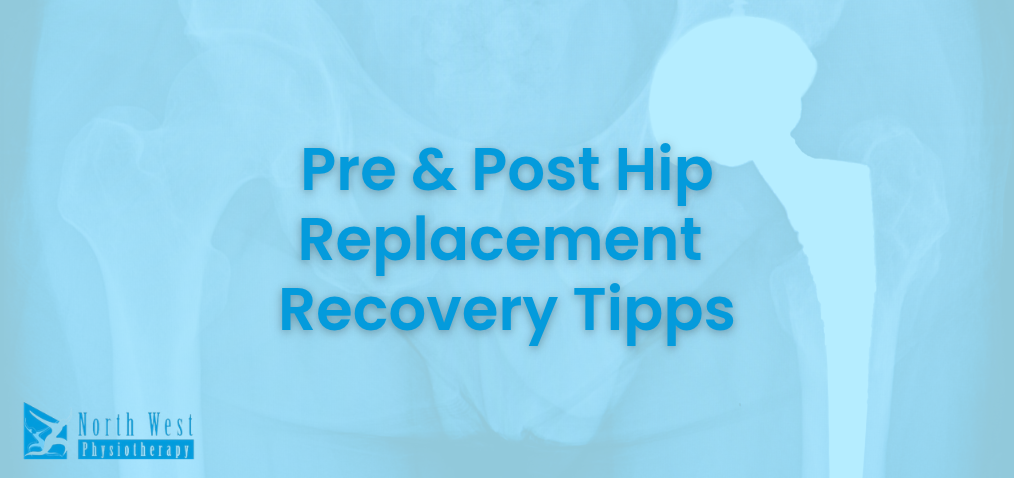
If you have a hip replacement coming up, one of the best things you can do in the weeks before surgery is keep your hips and legs moving with a short routine of gentle strength and mobility exercises, approved by your surgeon. At North West Physiotherapy, we call this pre-op exercise, and we provide individualised pre-hip replacement exercise programs to help patients prepare for surgery. It’s about going into surgery stronger and giving yourself a head start on recovery.
This guide covers the exercises we commonly use, how often to do them, what to avoid, and what exercises after a hip operation look like at each stage. We’ll explain the why behind each step, and we’ll be upfront about what exercise can and can’t promise.
Do pre hip replacement exercises really help?
Pre-op exercise is a low-risk way to build strength and confidence. While no routine can guarantee a faster recovery, pre-habilitation helps you make the most of your physical abilities before surgery, particularly by strengthening the muscles that support your hip and maintaining as much mobility and function as possible. The aim is to go into surgery stronger, fitter and better prepared for the physical demands of recovery.
When should you start, and how often?
Start as soon as you have a surgery date and your surgeon or physio has given the all-clear. Starting exercises while awaiting surgery can help maintain strength and mobility.
Why we like to see you early
The earlier you come to us, the sooner we can put a pre-op and post-op plan in place, and the more time you have to build strength before surgery. Our pre-op exercise is a tailored, evidence-based program, supervised by your physio and shaped around your hip, your health and your goals.
Pre hip replacement exercises to try
These are common, gentle exercises. Your physio will tailor the list to your hip, your fitness and your goals, and will show you each one in person.
-
- Thigh squeezes: With your leg straight, press the back of your knee into the bed, hold for 5 seconds, then relax. This activates your quadriceps, which are important for walking and standing.
- Buttock squeezes: Squeeze your glutes together for 5 seconds. Your gluteal muscles help support hip stability and walking.
- Heel slides: Slide your heel towards your bottom, keeping your knee pointing at the ceiling. This builds hip movement.
- Leg slides out to the side: With toes pointing up, slide your leg out and back. This works the hip abductors, the muscles that keep your pelvis steady when you walk.
- Glute bridges: Lying on your back with knees bent, gently lift your hips and lower them with control, only if it’s comfortable.
- Sit to stand: Rise from a firm chair and sit back down slowly. You’ll do this dozens of times a day after surgery.
- Standing hip extension and abduction: Hold a bench or sturdy chair and take your leg back, then out to the side, in small, controlled movements.
- Walking, stationary cycling or swimming: Low-impact exercise builds general fitness. Choose what you enjoy and keep it comfortable.
You’ll leave your session with step-by-step instructions as a printout or through an app, so you can do your routine confidently at home.
What to avoid before surgery
-
- Pushing through sharp or worsening hip pain
- High-impact or twisting activities that flare your hip
- Starting a heavy new gym program without guidance
- Stopping movement altogether, because complete rest tends to make muscles weaker and joints stiffer
Exercises for post hip replacement
Early mobilisation is an important part of recovery following hip replacement surgery. Australian hospital guidance encourages hip movement immediately after surgery to minimise stiffness and pain. Physiotherapy can help guide exercise progression and functional recovery.
Early exercises (hospital stay to about 6 weeks)
These are the gentle foundations, as cleared by your team.
-
- Thigh and buttock squeezes
- Heel slides
- Leg slides out to the side
- Straight leg raises
- Standing hip bends to a comfortable height
- Short, frequent walks
Building exercises (as you’re cleared to progress)
Some programs start more advanced work from around three weeks after surgery, depending on how you’re recovering and feeling.
-
- Glute bridges
- Standing hip extension and hip abduction
- Sit to stand and gentle squats
- Stationary bike
- Hydrotherapy, but only once your surgeon confirms it’s safe
Later exercises
Once you’ve had your review, your physio can add longer walks, balance work and strength training aimed at your own goals, whether that’s gardening, golf, Pilates or keeping up with the grandkids. Your physio will show you each of these in person.
Walking aids and setting up your home
A little planning before surgery makes the first weeks calmer. Clear rugs and clutter from walkways, set up a firm chair at a comfortable height, and ask your hospital team what equipment you’ll need. Our occupational therapists can help you plan your home, and our home visit physios can start your program where you’re most comfortable.
When to contact your surgeon
Call your surgeon or hospital if you notice pain that keeps building, redness, swelling or discharge around the wound, a fever, swelling or tenderness in your calf, or a sudden change in how your hip feels or how well you can put weight through your leg. Call 000 for chest pain or shortness of breath.
Is it time to consider a hip replacement?
Deep, dull pain that spreads to your groin, back or knee, a stiff hip, and difficulty walking or standing can all be signs your hip needs a closer look. Hip replacements are most commonly performed in people in their 60s and 70s, although adults across a wide age range may be eligible when it’s clinically appropriate. Your GP or surgeon can talk you through your options, and our hip pain physio guide explains what can help in the meantime.
How North West Physio supports you
At North West Physiotherapy, we start with your goals and build a plan around them. You’ll leave each session knowing what you’re doing and why.
Before your surgery
We teach you the exercises above, check your technique and adjust them as your pain and strength change. You’ll have step-by-step instructions as a printout or through an app, so you can do your routine confidently at home. Our physiotherapists can help you prepare for surgery and guide your rehabilitation afterwards.
After your surgery
Your physio works alongside your surgeon’s instructions to help you get the best outcome possible, supporting your recovery and return to everyday activities. The first few months matter most for getting back to your previous level of function, so our focus is on:
-
- Managing pain and swelling
- Restoring full movement
- Rebuilding strength
- A graduated, safe return to everyday activities and, when appropriate, to sport
We celebrate the milestones along the way, from the first walk without your aid to getting back to the garden, the golf course or being active with the grandkids.
Support that goes beyond the exercise list
Hip replacement recovery rarely involves one thing, so we can connect you with the rest of our team where it helps.
-
- Hydrotherapy: Once your surgeon confirms it’s safe, our hydrotherapy service offers a gentle way to build movement and strength
- Home visits: If getting to a clinic is hard in the early weeks, ask about our home visit physiotherapy
- Exercise physiology: Our exercise physiologists can carry your strength program forward as you progress
- Occupational therapy: Our OT team can help you plan your home setup and everyday routines
- Senior Strength Classes: A supported way to keep building strength once your rehab is finished. See our Senior Strength Classes
Pre hip replacement exercise FAQs
Should I exercise before a hip replacement?
Yes, in most cases. A gentle routine cleared by your surgeon helps keep your hip and leg muscles working before surgery. Check with your surgeon or physio first.
How long before hip replacement surgery should I start exercising?
As soon as you have a date and the all-clear, even if surgery is months away.
What exercises should I avoid before hip replacement surgery?
Avoid anything that causes sharp or worsening hip pain, along with high-impact and twisting activities that flare your hip.
How long is hip replacement recovery?
Everyday tasks usually come back within weeks. Full strength and stamina often take around 6 to 12 months, depending on your surgery and your progress.
When can I start exercises after a hip operation?
Gentle movement usually starts in hospital under your care team’s guidance. Your surgeon and physio will tell you when to add more.
Can North West Physio work with my surgeon?
Yes. We follow your surgeon’s instructions and precautions, and we’re happy to work alongside your surgical team throughout your recovery.
Your next step
Surgery is a big moment, and you don’t have to prepare for it alone. Every step forward counts, and we’d love to help you start strong. Book a pre-op physio session at your nearest North West Physiotherapy clinic and we’ll build a plan around what matters most to you.